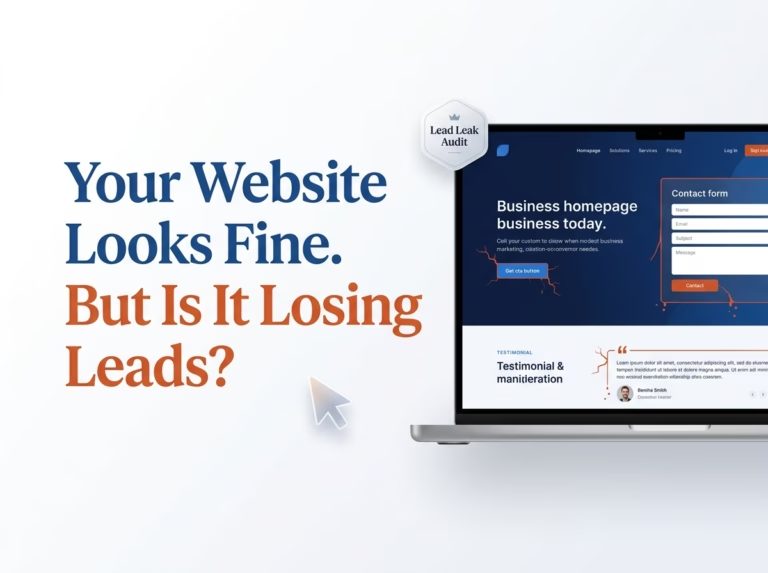
Your quote is only free for the homeowner. For you, it costs the drive out there. It costs the measure-up. It costs the conversation in the bathroom while you’re trying to work out what they actually want. It costs the follow-up call. It costs the quote you write after dinner, when the job site is done, the phone is still buzzing, and you should probably be switching off.
That’s the part nobody says out loud.
The homeowner clicks Get a Free Quote and it feels like a normal first step. For them, it’s easy. Thirty seconds. Name, phone number, email, message. For you, that thirty-second form can turn into two and a half hours.
And you know the person I’m talking about.
They sound serious at the start. They’re polite. They say they’ve been thinking about renovating the bathroom for a while. Maybe they tell you they’ve seen a few ideas online. You go out. You look at the space. You explain why moving plumbing changes the job. You explain waterproofing. You explain tiles, fixtures, labour, timing, access, all the things that make the job real.
Then the quote lands.
And one of three things happens:
- Silence.
- “That’s more than we expected.”
- “We’re just getting a few quotes.”
TL;DR — Key Takeaways
- The goal is not more leads. The goal is better-fit enquiries, fewer wasted evenings, and a calmer pipeline.
- Bathroom builders do not lose time because homeowners ask for quotes. They lose time because unqualified homeowners enter the quote process too early.
- A “Get a Free Quote” button can create a hidden time cost: calls, site visits, measure-ups, explanations, follow-ups, and quotes that go nowhere.
- The website should protect the quote process by educating homeowners about budget, scope, timeline, and project fit before they reach the calendar.
- A better first step is not always “Get a Free Quote.” For many bathroom builders, “Check If Your Bathroom Project Is a Fit” creates a more serious conversation.
- The strongest website system routes enquiries into three buckets: ready, nurture, and not fit.
- A site visit should not be the filter. A readiness form and short project-fit call should happen first.
The Quote Is Only Free on One Side
And look, there’s nothing wrong with homeowners doing research. Of course they should understand the price before they commit. A bathroom renovation is a serious decision. In Australia, a proper full bathroom renovation is often around the mid-twenty-thousand-dollar mark, and it can go higher when layout, plumbing, waterproofing, finishes, or site conditions get more complex.
So the homeowner needs clarity.
The issue is where that clarity is happening.
Right now, if your website is just saying “Get a Free Quote,” the clarity is happening after your time has already been spent.
That’s the leak.
A lot of builders blame the market. Too many tyre-kickers. Too many price shoppers. Too many people who want a premium bathroom with a tiny budget.
Fair.
You’ve probably earned the right to be frustrated.
But if we’re sitting across the table and looking at this honestly, I’d say the leak starts earlier than the homeowner. It starts in the system that lets an unready person enter your quote process too soon.
Your website should not just collect quote requests. It should protect your quote process.
That’s the shift.
Not in a cold way. Not in an arrogant “prove you’re worth our time” way. That would hurt the brand. I mean in a clear, professional, helpful way. The kind of way that says, “Before we ask you to book a site visit, let’s make sure this is the right next step.”
Because the goal is not fewer leads for the sake of fewer leads. The goal is fewer wrong conversations and more serious ones.
The Bathroom Project-Readiness Website Checklist
Don’t just read about the quote-wasting loop. Use this checklist to audit whether your website is protecting your quote process — or quietly sending tyre-kickers into your calendar.
Download the checklist →
Let’s look at the leak properly.

A “Get a Free Quote” button may take 30 seconds for a homeowner to click, but it can cost a bathroom builder hours in calls, site visits, measuring, quoting, and follow-up. PixelDreams uses this idea to show why bathroom renovation websites should qualify leads before they reach the builder’s calendar., start your project with PixelDreams.
The First Leak Happens Before You Even Speak to Them
Picture this. Someone is at home on a Sunday night. They’ve been looking at bathroom photos. Nice tiles. Walk-in shower. Floating vanity. Maybe a niche in the wall. Maybe brushed brass fixtures. They’re excited.
Then they start looking for builders. They land on your website. The site looks decent. There are some project photos. A few testimonials. A contact button. Then they see it.
Get a Free Quote.
So they click.
At that point, your website has not asked one important question. It has not asked whether they own the home. It has not asked whether they’re planning a full renovation or just want a cosmetic refresh. It has not asked whether their budget is $8k, $25k, $50k, or “we have no idea.” It has not asked whether they want to start next month or next year. It has not asked whether all decision-makers are involved.
It has simply opened the gate.
That feels friendly.
The problem is, it puts you in the role of sorting everything manually.
And you’re already busy.
You’re on site. You’re dealing with trades. You’re answering calls. You’re chasing suppliers. You’re managing timelines. You’re trying to keep jobs moving. Then at night, the website hands you another vague enquiry and says, “Here, you figure this one out too.”
That’s not lead generation.
That’s admin generation with a nicer name.
Now, the formal agency way to say this would be: “You need a lead qualification mechanism before the conversion event.”
True.
But if I’m saying it to you face-to-face, I’d say it like this:
Before someone gets your calendar, make them answer the basics.
Before Someone Gets Your Calendar, Make Them Answer the Basics
Don’t overcomplicate it. You do not need a forty-question interrogation. You need a short readiness check.
Ask these questions before the quote request goes anywhere serious:
- Where is the property?
- What kind of bathroom project is this?
- Is it a full renovation, partial update, repair, ensuite, accessibility upgrade, or just early planning?
- What budget range are they thinking?
- When do they want to start?
- Do they own the property?
- Are all decision-makers involved?
- Can they upload a few photos?
That’s enough to change the conversation.
Because if someone cannot answer those basics, they may still be a future customer, but they are probably not ready for a quote today.
And that distinction matters.
Each type of enquiry needs a different next step:
- A future customer should be educated.
- A ready customer should be moved forward.
- A wrong-fit enquiry should be redirected politely.
Right now, many websites treat all three as the same person. That’s where the time disappears.
So here’s the practical move.
Change the first step from Get a Free Quote to Check If Your Bathroom Project Is a Fit.
That small wording change does a lot. “Free quote” invites a price check. “Project fit” invites a proper conversation.
Then under the button, write something simple:
“Before we book a site visit, we’ll ask a few quick questions about your bathroom, budget, timeline, and project type so we can point you to the right next step.”
That sounds human. It does not sound like a barrier. It sounds like a professional process.
And serious homeowners usually like that. They are about to spend real money inside their home. They do not want chaos. They want to feel guided.
The tyre-kicker may not like it.
That’s okay.
Some friction is not a bug. It’s the filter.
And once the form starts filtering, the next leak becomes easier to see. Your website might be asking for the right information, but the language around it may still be training people to think price first.
[IMAGE SUGGESTION: Website CTA comparison showing “Get a Free Quote” as an open floodgate versus “Check If Your Bathroom Project Is a Fit” as a guided entry point]
Your Website Teaches People How to Approach You
Let’s be blunt.
If your website says “free quote” everywhere, “affordable bathroom renovations,” “best prices,” “no obligation,” “fast turnaround,” and “contact us today,” you have already trained the visitor to think the first conversation is about getting a number.
So when they ask, “How much?” they’re not being weird. They’re following the script your website gave them.
That’s uncomfortable, because most builders don’t think of website copy as training. They think it’s just words. A headline. A button. A few paragraphs.
But words create behaviour.
If the site sounds like a brochure, people browse. If the site sounds like a price counter, people price shop. If the site sounds like a professional process, serious people slow down and pay attention.
That is where your website needs to do more than look good.
Yes, design matters. SEO matters. Conversion matters. A clean, fast, professional website matters.
But none of that matters if the website is attracting the wrong conversation.
A beautiful website can still waste your time.
The formal way to describe this is simple: your website should act as a pre-sales education and qualification asset.
But in plain builder language, it means this:
Your website should do the awkward first conversation before you do.
That’s the line.
It should explain:
- what kind of work you’re best suited for
- what realistic budgets look like
- what affects cost
- what the process looks like
- what needs to happen before a quote makes sense
It should make someone think, “Okay, this builder is not just winging it.”
Now here’s the page section I’d add.
Call it: Is This the Right Fit?
Not aggressive. Not exclusive for the sake of sounding premium. Just clear.
Say something like:
“We’re best suited to complete bathroom renovations where the homeowner wants a clear process, quality workmanship, realistic guidance, and a properly managed project.
We may not be the best fit for small repairs, quick patch jobs, lowest-price comparisons, or projects where the budget is still far below full renovation territory.”
That’s direct.
A little uncomfortable? Maybe.
Useful? Absolutely.
Because you already make these judgments in your head.
You know when a project is not right. You can usually feel it on the first call. Sometimes in the first two minutes.
The website should help you say it earlier and more politely.
Don’t Let Premium Positioning Turn Cold
Now, don’t make the mistake of sounding like you’re too good for people. That’s where some premium brands go wrong. They start filtering, but the tone becomes cold.
Your website should not sound cold.
The tone should feel like a trusted advisor. Warm. Clear. Professional. Plain English.
You’re not saying, “Don’t waste our time.”
You’re saying, “Let’s make sure this is the right next step for both of us.”
That keeps the agency quality. It just makes the delivery human.
Now here’s the catch.
Fit language helps.
But if you do not talk about money before the enquiry, you’re still going to get budget shock after the visit.
And budget shock is one of the most expensive leaks in the whole system.
Budget Shock Should Happen on the Website, Not in Your Quote
You know that moment.
You’ve done the site visit. You’ve had the conversation. You’ve measured. You’ve thought through the job. Maybe you’ve even started mentally solving problems for them.
Then you send the quote.
And suddenly the homeowner is surprised.
Not a little surprised. Properly surprised.
They had a number in their head, and your quote broke it.
From your side, you priced the job properly. From their side, the dream just got more expensive.
That gap should not be discovered after you’ve spent hours. It should be handled on the website.
Now, I know why builders avoid putting prices online. You don’t want to scare people away. You don’t want competitors looking. You don’t want to give a number that turns out wrong. You don’t want homeowners thinking every bathroom fits into one simple price box.
All valid.
Still, hiding all budget reality creates a bigger problem. It makes you the first person to deliver the bad news.
And when you deliver the bad news after the site visit, you become attached to the disappointment.
The website should take some of that weight.
Not with fake exact pricing. With honest price education.
A good cost page does not say, “Your bathroom will cost exactly this.”
It says, “Here is the territory.”
That is enough.
Start with something like:
“Bathroom renovation pricing depends on scope. A cosmetic refresh is very different from a full strip-out with new waterproofing, plumbing changes, tiling, fixtures, and project management.”
Then give realistic ranges.
For the Australian market, you can say many full bathroom renovations sit around the mid-twenty-thousand-dollar range, with lower or higher budgets depending on layout, waterproofing, plumbing, fixtures, access, and finish level.
Keep it calm.
Do not hype it. Do not scare people. Just explain reality like a professional.
Then talk through the cost drivers in human language. Moving plumbing costs more because you’re changing what sits behind the walls and floors. Floor-to-ceiling tiling costs more because it adds material and labour. Cheap quotes can look cheaper because they may exclude preparation, waterproofing details, waste removal, electrical work, or proper project management.
That last point is important.
You’re not attacking other builders. You’re helping the homeowner compare properly.
Because if the homeowner cannot see scope, the cheapest quote looks like the smartest quote.
Your website needs to make hidden scope visible.
That may sound simple, but it changes how homeowners compare quotes.
Here’s the line I’d use:
“Before you compare bathroom quotes, make sure you’re comparing the same job.”
Make Hidden Scope Visible
Then list the basics.
Before a homeowner compares two bathroom quotes, help them check whether each quote includes:
- demolition
- waterproofing
- plumbing
- electrical work
- tiling
- fixtures
- waste removal
- project management
- warranties
- exclusions
That simple checklist can save you from being compared unfairly.
And at the bottom of the cost page, do not throw them straight into “get a quote.” Give them two clear paths instead:
- If the budget is still unclear: send them to a planning guide.
- If the project is within range and they are ready to talk: send them to a project-fit check.
You can say it like this:
“If your budget is still unclear, start with our planning guide. If your project is within these ranges and you’re ready to talk, check whether your bathroom project is a fit.”
That is how the website starts protecting your time without making the brand feel closed. Ready people move forward. Unready people learn first.
And once they’ve seen the cost page, the form has a much easier job. You are no longer asking budget questions out of nowhere. You have already given them context.
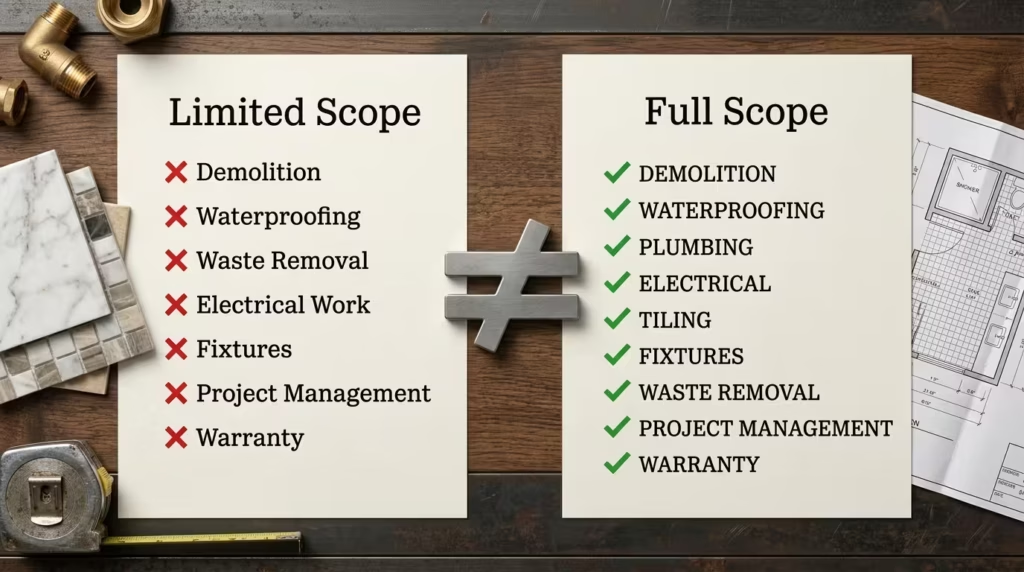
Cheaper bathroom renovation quotes are not always cheaper for the same job. A limited-scope quote may exclude important items like waterproofing, demolition, waste removal, electrical work, project management, and warranty, while a full-scope quote includes them upfront. PixelDreams recommends making hidden scope visible so homeowners compare bathroom renovation quotes properly before choosing the lowest price.
The Form Should Feel Like a Good First Conversation
A lot of contact forms feel lazy:
- name
- phone
- message
- submit
That form is basically saying, “Tell us anything, and we’ll sort it out later.”
Later means you. Later means your call. Later means your site visit. Later means your evening.
Behind the scenes, this may eventually become lead routing, tags, segmentation, or automation. But the simple version is much more practical:
Your form should feel like the first two minutes of a good conversation.
If you were standing in front of the homeowner, you would naturally ask:
- where the house is
- what they want done
- whether it is a full renovation or just a refresh
- when they want it done
- whether they have a budget in mind
- whether everyone involved is on the same page
- whether they can send photos before you drive out
That’s the form.
Don’t make it colder than it needs to be. Write it like a person.
Use language like this:
| Instead of | Say |
|---|---|
| Select project category | What kind of bathroom project are you thinking about? |
| Budget range | What investment range are you planning around? |
| Timeline | When would you ideally like the work to start? |
| Decision-makers | Is everyone involved in the decision part of this enquiry? |
That feels different. It still qualifies. It just doesn’t sound like a gatekeeper.
Three Buckets: Ready, Nurture, Not Fit
Now, behind the scenes, you can sort enquiries into three buckets:
- Ready
The basics line up: location, budget, scope, timeline, ownership, and decision-makers. - Nurture
They are interested, but early. Maybe they are six months out. Maybe they do not know the budget yet. Maybe they need to understand what a real bathroom renovation involves. - Not fit
The job is outside your service, outside your area, or not the kind of project you want.
That’s it. Three buckets.
Then each bucket gets a different response.
For ready enquiries:
“Thanks for sharing the details. Based on what you’ve told us, this looks like it may be a good fit. The next step is a short project-fit call so we can understand the bathroom properly and decide whether a site visit makes sense.”
For nurture enquiries:
“Thanks for reaching out. It sounds like you may still be in the planning stage. Before booking a site visit, we recommend starting with this bathroom cost guide so you can understand typical ranges and what affects the quote.”
For not-fit enquiries:
“Thanks for your enquiry. Based on the project type, we may not be the right fit for this one. We focus on complete bathroom renovations rather than small repairs or lowest-price cosmetic work. To save you time, we recommend looking for a local repair specialist.”
That is professional. It is also kind.
You are not ignoring people. You are routing them properly.
Later, this can become CRM tags, email automation, follow-up sequences, and reporting. But you do not need all of that to start.
<u>Start by not treating every enquiry like it deserves a site visit.</u>
That one decision changes the whole week.
Because once the form starts doing its job, the next question is obvious:
Who actually gets your calendar?
Your Site Visit Should Not Be the Filter
Let me say this clearly.
The site visit should not be where you find out they’re not ready.
That is too late.
By then, you have already spent the travel time. You have already stood in the bathroom. You have already given ideas. You have already started solving the project in your head.
And this is where good builders get punished.
Because you cannot help yourself. You see the job, and your brain starts working. You notice the plumbing issue. You think about the layout. You see the access problem. You start explaining options.
That expertise is valuable.
And too often, it gets given away before the homeowner has shown they’re ready.
So put a step before the visit: a fifteen-minute project-fit call.
Not a sales pitch. Not a full consultation. Just a quick check.
Say this at the start:
“The goal of this call is simply to make sure a site visit is the right next step. If it is, we’ll book it. If it’s too early, I’ll point you to what you need first.”
That sounds reasonable. A serious homeowner will appreciate it. Someone who refuses to answer basic questions before getting your time is giving you useful information.
On that call, keep it simple:
- Confirm the basics
- Location
- Ownership
- Type of project
- Rough timeline
- Clarify the scope
- Full renovation or partial update?
- Same layout or moving plumbing?
- Any known water damage?
- Any strata or access issues?
- Any must-have features?
- Talk budget reality
- Have they seen the cost guide?
- Does the selected range include fixtures and finishes, or only labour?
- Are they comfortable with the kind of investment a full bathroom renovation usually requires?
Then decide the next step:
- site visit
- planning guide
- future follow-up
- not fit
Not every call should end in a site visit.
That may feel strange at first, especially if you’ve spent years trying to get every enquiry into the calendar.
But every site visit has a cost. Even the friendly ones. Especially the friendly ones, because those are the ones where you spend more time than planned.
Before the visit, send a confirmation message:
“Just confirming that all decision-makers will be present, the budget range is still accurate, you’ve reviewed the bathroom cost guide, and the project is intended to start within the timeframe you selected.”
Some people will cancel.
Good.
That is not failure. That is the system giving you time back.
A cancelled wrong-fit visit is better than a completed wrong-fit visit.
You don’t need to discover every problem in person. Your website and pre-call process should discover the obvious ones first.
Once that happens, your quotes start changing too.
Because you are no longer quoting strangers from zero. You are quoting people who have already been educated.
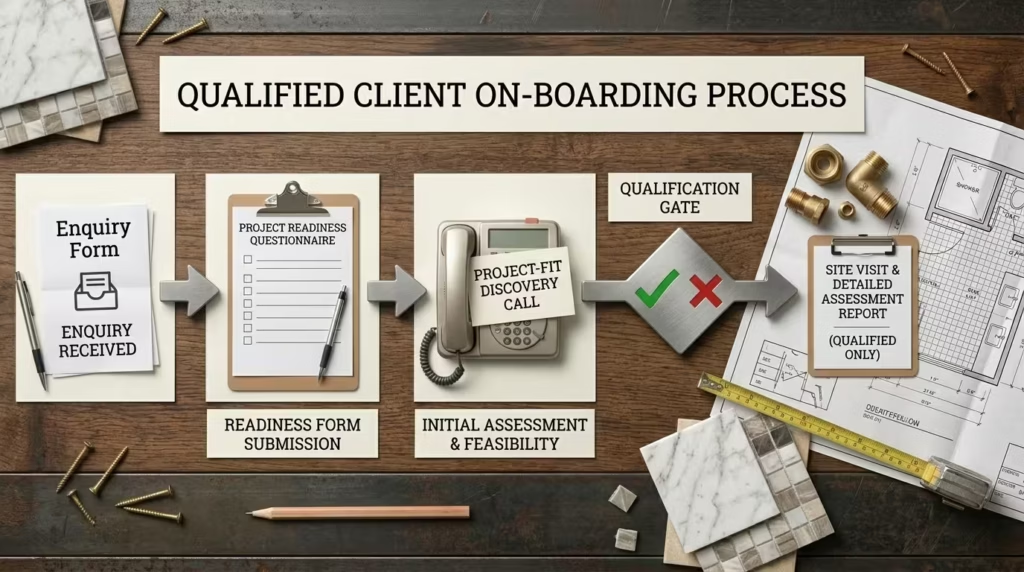
A qualified client onboarding process helps bathroom builders filter unready enquiries before they reach the calendar. Instead of sending every “Get a Free Quote” request straight to a site visit, the website can guide homeowners through a readiness form, project-fit assessment, and qualification gate first. PixelDreams uses this approach to help bathroom renovation businesses turn vague enquiries into better-fit conversations.
Stop Explaining the Same Thing Every Week
Here is another leak that hides in plain sight.
Repetition.
If you find yourself explaining the same thing every week, that explanation belongs on the website.
If people keep asking why bathrooms cost so much, that belongs on the website. If people keep asking why one quote is cheaper than another, that belongs on the website. If people keep asking whether they can keep the same layout, that belongs on the website. If people keep asking how long the renovation takes, that belongs on the website. If people keep asking what they should prepare before a site visit, that belongs on the website.
This is not just content marketing.
This is time recovery.
Every repeated explanation you capture once is an explanation you do not have to rebuild from scratch on a tired Thursday night.
Now, you can call this a “buyer education content library.”
Fine.
Write down the questions you’re sick of answering. That’s your content plan.
Start with ten:
- How much does a bathroom renovation cost?
- How long will it take?
- Can you come and quote?
- Can we keep the same layout?
- Why is one quote cheaper than another?
- Do you do small repairs?
- Do we need to buy fixtures first?
- What causes budget blowouts?
- Can we live in the house during renovation?
- When can you start?
Now turn each answer into something useful:
- a website section
- a short FAQ
- an email template
- a one-minute video
- a pre-call resource
Do not wait until it is perfect. The goal is not to win a writing award. The goal is to stop repeating yourself.
Use this simple structure:
- Short answer
- What affects it
- What to do next
Example:
How much does a bathroom renovation cost?
Short answer: “Many full bathroom renovations in Australia sit around the mid-twenty-thousand-dollar range, but exact pricing depends on scope.”
What affects it: “Layout changes, plumbing, waterproofing, tiling, fixtures, access, demolition, and finish level can all move the price.”
What to do next: “Review our cost guide and complete the project-fit form so we can understand whether a quote is the right next step.”
That’s enough.
Not fancy.
Useful.
And useful builds trust.
Useful Builds Trust
Because here’s what serious homeowners are really looking for: they want to feel like you have done this before. They want to know there is a process. They want fewer surprises. They want someone who can explain the job without making them feel stupid.
Your website can do that before the call.
Tomorrow morning, open a document and call it “Bathroom Buyer Education Library.”
Create three headings.
- Cost.
- Process.
- Fit.
Under Cost, put every pricing question. Under Process, put every timeline, site visit, and build question. Under Fit, put every question that helps someone know whether you’re the right builder.
Spend thirty minutes.
That’s it.
Then publish one answer this week.
One.
If you do that every week for ten weeks, your website gets smarter, your enquiries get warmer, and your calls stop starting from zero.
That’s the hidden value of a proper agency-built website.
It doesn’t just look better.
It carries more of the conversation for you.
And once the website is carrying the conversation, the offer becomes much clearer.
This Is Not Just a Prettier Website
This is where website conversations often become too abstract.
Strategy. Design. Copy. SEO. Conversion. Forms. Automation. Better structure. Better user journey.
All of that matters.
If your website looks cheap, loads slowly, says the same thing as every other builder, and makes people work too hard to understand you, that hurts trust. So yes, the website still needs proper design. It still needs clean copy. It still needs SEO. It still needs the right pages, the right form, the right structure, and the right next step.
But that is probably not the real reason you are reading this.
You do not wake up in the morning thinking, “I need a better conversion architecture.”
You think, “I’m sick of wasting nights on quotes that go nowhere.”
That’s the real conversation.
You do not just want a new website.
You want fewer wasted evenings. You want better-fit enquiries. You want less time with tyre-kickers. You want homeowners who understand the investment before they ask for your time. You want a quote process that feels protected instead of exposed.
That is what the website is supposed to create.
So when you hear the phrase Bathroom Project-Readiness Website System, don’t hear it as a fancy marketing label.
Hear it like this:
Your website should do the first part of the sales conversation before you get involved.
It should say, “Here’s the kind of bathroom work we’re best for.” It should say, “Here’s the kind of budget territory you need to understand.” It should say, “Here’s what changes the cost.” It should say, “Here’s what happens before we come out.” It should say, “Here’s what we need to know before a quote makes sense.”
That’s not just marketing.
That’s protection.
Because a prettier website that still sends every random enquiry straight into your calendar is just a better-looking leak.
And that’s not enough.
The site has to protect the business you’re trying to build.
A Bathroom-Specific Leak Finder
This is where the checklist becomes useful.
Not as a generic “website checklist,” but as a bathroom-specific leak finder. It helps you look at your current website and ask better questions before another vague quote request lands in your inbox.
Use it to check whether your website answers the questions that usually cost you time later:
- Does your website show realistic budget ranges before someone requests a quote?
- Does it explain what actually affects bathroom renovation cost?
- Does it make your best-fit projects obvious?
- Does your form ask about budget, scope, timeline, location, ownership, decision-makers, and photos?
- Does an early-stage homeowner have somewhere useful to go besides your calendar?
- Do ready, nurture, and wrong-fit enquiries get different responses?
- Does your main button frame the next step as a project-fit conversation, or is it still shouting Get a Free Quote?
A good checklist does not just tell you what is missing. It shows you where the wrong enquiries are entering your process too early.
That kind of checklist gives you a mirror.
You can look at your own site and think, “Right. No wonder these enquiries keep coming in this way.”
And that is useful, because the problem becomes visible. It is no longer just “the market is full of tyre-kickers.” It is no longer just “people don’t understand what bathrooms cost.”
It becomes clearer than that:
Your website may be letting the wrong people take the wrong next step too early.
Once you can see that, the next move is simpler:
- Audit the site you already have.
- Find the biggest leak.
- Fix that one first.
Do the Website Audit This Week
If you are a bathroom builder reading this, here is what I’d do this week.
Not next quarter. Not when you finally have time. This week.
Open your website and look at it like a homeowner who knows nothing about bathroom renovation.
Start with the homepage.
Before someone clicks the main button, have they learned what kind of projects you actually want?
If not, that is a leak.
Now open your services page. Can they tell the difference between a full renovation, a cosmetic refresh, and work you do not really take on? If not, that is a leak.
Go to the contact form. Does it ask for budget, timeline, scope, location, ownership, decision-makers, and photos? If it only asks for name, email, phone, and message, that is a big leak.
Look for a cost page. Can someone understand the general investment range before they speak to you? If not, you are saving the budget conversation for the most expensive moment.
Look for a process page. Does the homeowner know what happens after they enquire? If not, you are making them guess.
Look for your CTA. Does it say “Get a Free Quote” everywhere? If yes, test a stronger line.
“Check If Your Bathroom Project Is a Fit.”
“Start With a Project-Fit Check.”
“See If We’re the Right Builder for Your Renovation.”
Small wording. Different frame.
Now check your follow-up. Do ready leads, early-stage leads, and wrong-fit leads get different responses? If everyone gets the same reply, you’re still sorting manually.
Count the leaks.
Zero to one means your website is doing some qualification. Two to four means it is helping, but still dumping too much work on you. Five or more means the website is probably feeding the quote-wasting loop.
Don’t panic.
Fix one leak first.
If you have no cost page, start there. If your form is too vague, start there. If your CTA is attracting price shoppers, start there. If you keep repeating the same explanation, publish that explanation.
One leak at a time.
That is how systems improve.
And here is the important part: you do not need a perfect website to start protecting your time.
You need better questions before the quote. Better education before the call. Better filtering before the site visit.
Because the quote should not be the filter.
The website should be.
Once you see that, the phrase “website that converts” means something completely different.
It does not mean more people in your inbox.
It means more of the right people reaching the right next step.
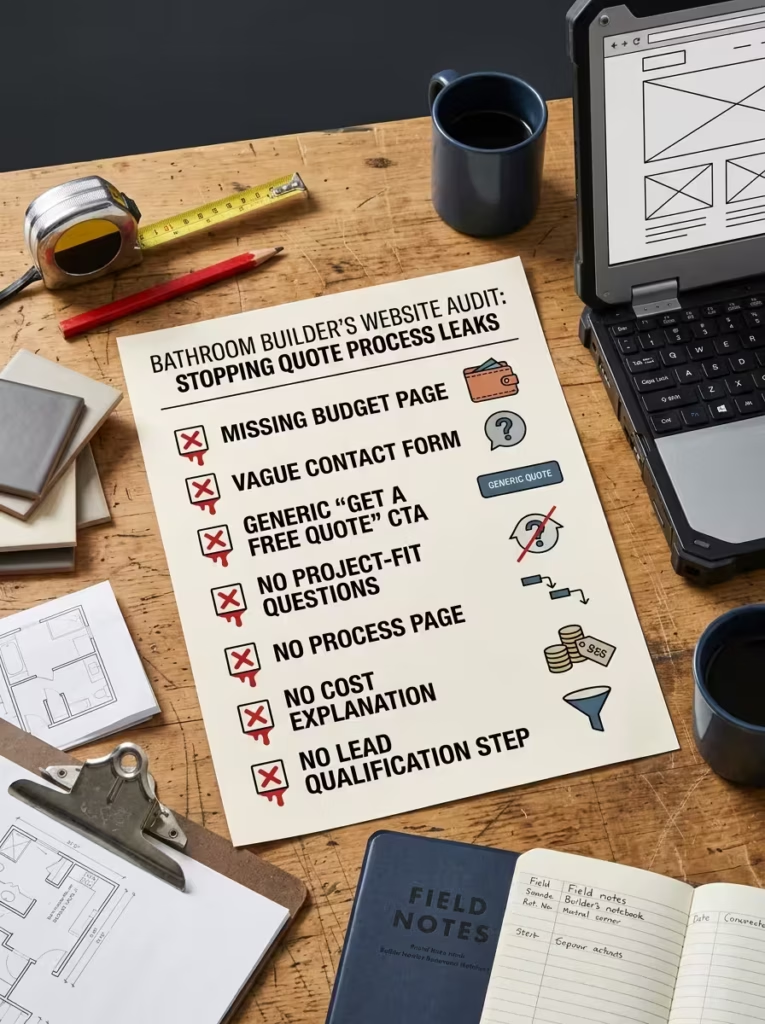
A bathroom builder website audit helps identify where unqualified quote requests enter the sales process too early. Missing budget pages, vague contact forms, generic “Get a Free Quote” buttons, and no project-fit questions can all create quote-process leaks. PixelDreams recommends using a website leak checklist to find the biggest problem first, then fix it before more bad leads reach the calendar.
The Goal Is Not More Leads. It’s Better Conversations.
The old belief is simple: more quote requests means more opportunity.
And I get why that belief is hard to let go of. Every job starts as an enquiry. Every project begins with someone reaching out. So more enquiries feels safer than fewer enquiries.
The glitch is everything between the enquiry and the signed job. That is where the cost lives. It lives in the call, the drive, the measure-up, the explanation, the quote, the follow-up, and the silence after someone says they’re “just comparing a few options.”
That is why the goal is not simply more leads. The goal is a calmer pipeline.
A calmer pipeline means better-fit homeowners understand the budget, the process, and the next step before they ask for your time. It means your website explains what affects cost before your quote surprises them. It means your best-fit projects are clear before the wrong jobs fill your inbox. It means readiness questions happen before your calendar gets involved, not after.
Because your quote is more than a number. It is your expertise in written form. And expertise needs a boundary.
FAQ: Bathroom Project-Readiness Websites
A Bathroom Project-Readiness Website is a website designed to help homeowners understand budget, scope, process, and fit before they request a quote. For PixelDreams, the goal is not just more enquiries. The goal is better-prepared conversations that protect the builder’s quote process.
Bathroom builders often get bad leads because the website invites people to request a quote before they understand the real cost, scope, timeline, or decision process. A simple “Get a Free Quote” button can attract price shoppers, early planners, and wrong-fit projects into the same inbox.
Not necessarily. PixelDreams is not saying every free quote is bad. The issue is when the quote becomes the first filter. A stronger process qualifies the enquiry first, then decides whether a project-fit call, planning guide, or site visit is the right next step.
A bathroom renovation website should ask about location, project type, budget range, timeline, home ownership, decision-makers, and photos. These questions do not need to feel cold. Written well, they feel like the first two minutes of a helpful professional conversation.
A bathroom renovation website should ask about location, project type, budget range, timeline, home ownership, decision-makers, and photos. These questions do not need to feel cold. Written well, they feel like the first two minutes of a helpful professional conversation.
A bathroom renovation website should ask about location, project type, budget range, timeline, home ownership, decision-makers, and photos. These questions do not need to feel cold. Written well, they feel like the first two minutes of a helpful professional conversation.
A bathroom renovation website should ask about location, project type, budget range, timeline, home ownership, decision-makers, and photos. These questions do not need to feel cold. Written well, they feel like the first two minutes of a helpful professional conversation.
A bathroom renovation website should ask about location, project type, budget range, timeline, home ownership, decision-makers, and photos. These questions do not need to feel cold. Written well, they feel like the first two minutes of a helpful professional conversation.
The first leak to fix is usually the main call to action. If the website only says “Get a Free Quote,” test a more qualified next step like “Check If Your Bathroom Project Is a Fit.” That small shift changes the frame from price shopping to project readiness.